Friday, 30 January 2015

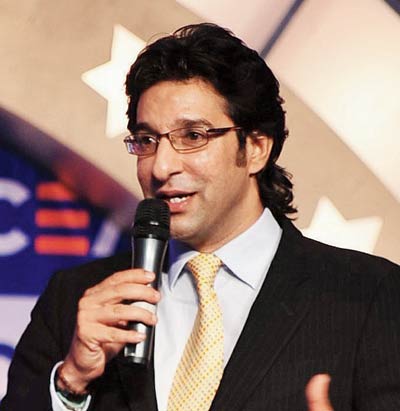
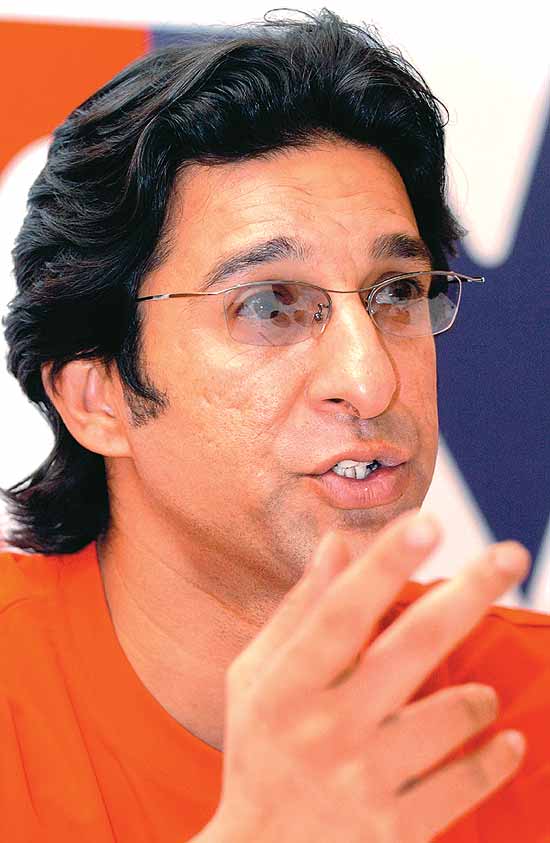
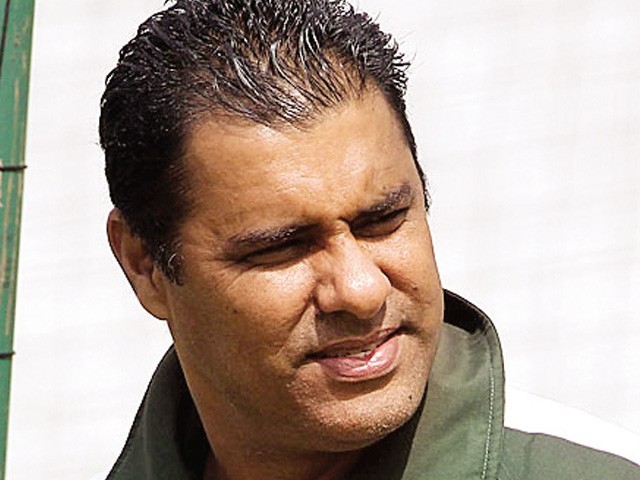
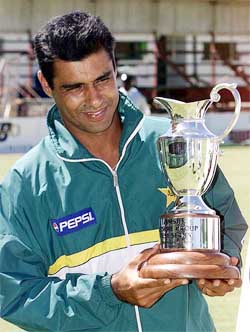
Waqar Younus

Waqar Younus Biography

Source(google.com.pk)
Waqar Younis was born in small city of Pakistan,Vehari 16 November 1971. He was born in a Jatt Muslim family. Waqar was educated in Sadiq Public school in Bahawalpur in Pakistan. The Pakistani college in Sharjah and the Government college in Vehari. Waqar raised in Sharjah in the UAE, where his father was a contract worker. Waqar returned to Pakistan and started playing cricket there during his adolescent years. Waqar is married to D.r Faryal ,a Pakistani Australian. They have a son Azaan Waqar and one daughter Maira Waqar and Waqar now lives in Castle Hill in Australia. He has also worked as a TV sports commentator for the Nine Network in Australia and for Ten Sports in the UAE. Waqar Younis is a famous Pakistani right-hand fast bowler in cricket and widely regarded as one of the greatest fast bowler of all time. Waqar holdes the record for the youngest Pakistani test captain and the 3rd youngest test captain in cricket history. Waqar played 87 test matches and 262 ODI matches for Pakistan between his international cricket career from 1989 till 2003. His trademark was his quality to reverse swing a cricket ball at high speed. Waqar took 373 test wickets and 416 ODI wickets during his cricket career. Both with bowling partner Wasim Akram, Waqar formed one of the world's most feared bowling attacks. He has the best strike rate for any bowler with over 350 test wickets. Waqar worked as a bowling coach with the national side from 2006/2007. He was appointed as the coach of the Pakistan cricket team on 3rd March 2010. Waqar resigned as Pakistan's cricket coach on 19 August 2011 citing personal reasons. Waqar joined Sun-risers Hyderabad as their bowling coach for the Indian IPL 2013 season.   
Waqar start his cricket career in 1987,88 Pakistan,playing for several 1st-class cricket clubs. However he suffered an injury when he had removed his small finger on left arm,after he had jumped into a cannal. Waqar recovered from this accident and went on to continue his sporting career. Waqar was eventially discovered by famous Pakistan captain, Imran Khan and was selected to be part of the national team. Waqar had played only 6 first class matches when he got picked for the Pakistan camp out of the blue. He says "I remember Imran Khan was not feeling well at the time, and was not present at the come, Luckily the Super Wills Cup was going on, and there was a match between United Bank and Delhi XI. Saleem Jaffar got was injured, and Igor the opportunity to play that match. Imran watched me on TV, and actually came to the ground to watch the end of the match. The very next day, he meeting Imran Khan at the time was enough of an experience for me, but for him to notify me of my selection was just out of this world. "
English audiences became aware of Waqar's talent during the early 1990's, when Waqar played for Surrey. By taking 113 wickets in 582 overs for Surrey in 1991, at a mere 14.65 apiece,and by carrying on his shoulders an otherwise moderate county attack, Waqar announced himself as one of the finest contemporary bowlers. There he displayed excellent cricketing performances and attracted attention from the sporting public. Waqar went on to win the English county championship with Glamorgan in 1997. Waqar took seven wickets for 25 vs Lancashire at Liverpool on 21 June 1997,which included a hat-trick achieved after narrowly missing a hat-trick earlier in the innings. He made his international cricket start for Pakistan vs India on 16 November 1989, in the same match that Indian batsman Sachin Tendulkar made his start. He took four wickets in the drawn match including the wickets of Tendulkar and Kapil Dev. Waqar made an immediate impression with his speed and became known in the cricket media as "Wiki"or "Burewala Express". He along with Wasim Akrm opened the bowling attack regularly for Pakistan, becoming a feared and potent attack. At his peak, he developed into a very quick fast bowler and also became popular for achieving a hat-trick in a ODI match vs New Zea-land in 1994.
 Between the early periods of 2000, he stayed out of the Pakistan team for a brief period allegedly due to suspension and conflicts with bowling partner and captain Wasim Akram. Waqar return to cricket came with him being appointed the captain of Pakistan cricket team. However, he had to deal with allegations of ball-tampering and a number of controversies. In July 2000 He was banned for ball tampering and was fined 50% of his match fee. Waqar was involved in further controversy between 2003 World Cup matches. IN the opening match VS Australia, he was removed from attack after bowling a beamer at Andrew Symonds, becoming to 1st bowler to be disciplined in such a way between an international match. The Pakistanis then crashed out of the group stage after winning only 2 matches, both against associate member teams. After the tournament he conceded the captaincy and was dropped from international selection. After a nearly fifteen year cricket career,He announced his retirement from cricket altogether in April 2004.         
In March 2006, Waqar was appointed as the bowling coach for Pakistan. Waqar resigned from this position on six January 2007 in pretest against the Pakistan cricket board decision to retain him only for the test series vs South Africa and not for the subsequent series of 5 ODI matches. Waqar was re-appointed as Pakistan's bowling and fielding coach for their tour of Australia in December 2009.
He made his International cricket debut for Pakistan against India on 15 November 1989, in the same match that Indian batsman Sachin Tendulkar also made his debut. Younis took 4 wickets in the drawn match including the wickets of Tendulkar and Kapil Dev. He made an immediate impression with his speed and became known in the cricket media as "Wiki" or the "Burewala Express". Younis along with Wasim Akram opened the bowling attack regularly for Pakistan, becoming a feared and potent attack. His most recognized delivery was an inswinging yorker. At his peak, he developed into a very quick fast bowler and also became famous for achieving a hat-trick in a One Day International match against New Zealand in 1994. He won the English County Championship with Glamorgan in 1997. During the early periods of 2000, he stayed out of the Pakistan team for a brief period allegedly due to suspension and conflicts with bowling partner and captain Wasim Akram. His return to cricket came with him being appointed the captain of Pakistan, a position he held until his team failed to make an impact in the 2003 Cricket World Cup. He retired from cricket in 2003 after the Pakistan Cricket Board persistently ignored him for national selection.

In March 2006, he was appointed as the bowling coach for Pakistan. He resigned from this position on 6 January 2007 in protest against the Pakistan Cricket Board decision to retain him only for the Test series against South Africa and not for the subsequent series of five One Day International matches. He was re-appointed as Pakistan's bowling and fielding coach for their tour of Australia in December 2009. In February 2010, Younis was appointed the head coach of Pakistan after Intikhab Alam was sacked as coach, due to the low-level of performances of the national side during the tour of Australia earlier that year.

Waqar's first job as coach was to lead an inexperienced Pakistan side missing Younis Khan, Mohammad Yousuf and Shoaib Malik to the 2010 ICC World Twenty20 as a consolation though Waqar had two top-notch bowlers in Mohammad Amir and Mohammad Asif at his disposal. He guided the defending champions to the semi-final of the tournament before the were knocked out by Australia courtesy of a superb 60* by Mike Hussey who whacked three sixes in the final over to seal the victory.

The World Twenty20 was followed with the 2010 Asia Cup in which Pakistan lost to Sri Lanka by a narrow-margin as Pakistan's top order collapsed and it was Shahid Afridi who scored 112 to nearly guide Pakistan to victory. In the following match Pakistan lost narrowly against India courtesy of a six by Harbhajan Singh an the third ball of the final over. The following match was a dead rubber between Pakistan and Bangladesh and another Afridi century meant Pakistan scored 385 runs and they comfortably won the match by 139 runs

After this a tour of England followed with two Twenty20's against Australia and two Test matches. Pakistan won both Twenty20's comfortably and the first test saw Pakistan defeated by 154 runs. Pakistan rallied in the second test and for the first time in 15 years Pakistan defeated Australia in a Test match. Ironically the previous victory in 1995 was also courtesy of a superb bowling spell by Waqar Younis.

Waqar Younus

Waqar Younus

Waqar Younus

Waqar Younus

Waqar Younus

Waqar Younus
Waqar Younus

Waqar Younus
Waqar Younus
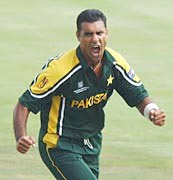
Waqar Younus

Waqar Younus

Shoaib Akhtar

Shoaib Akhtar Biograhy

Source(google.com.pk)
Shoaib Akhtar is a former professional cricketer who played testes and One Day International matches for the Pakistan national team in ICC organized events. He has been dubbed as The Rawalpindi Express after the place where he was born and he is arguably the fastest bowler the world of cricket has ever seen, easily clocking 150 km/hour on many occasions. He became the first man to bowl a delivery over 100 miles/hour or 161.3 km/hour, which is the fastest delivery ever bowled in the history of cricket against England. Moreover, not only did he achieve a speed of 100 miles/hour on his delivery, he achieved it twice during one single match and that is something that makes him very unique in the world of fast bowlers. His prowess lay in being able to bowl fast and precise Yorkers as well as quick bouncers and these abilities made him one of the greatest as well as most feared bowlers of all time, the likes of which had not been seen in international cricket since the times of Michael Holding, Joel Garner, Jeff Thompson, Dennis Lillie, Malcolm Marshall and the likes – players who depended on raw pace to pick up wickets.

However, Shoaib Akhtar was also a very controversial figure and it followed him wherever he went. It has been said that he was very selfish and not a team man. The Pakistan team management once sent him home from Australia in the middle of a series because of an alleged poor behavior on his part. In 2006, he was perhaps involved in the biggest controversy when WADA found Shoaib Akhtar guilty of taking performance enhancing drugs and the ICC banned him from playing cricket. This ban was however lifted and he returned to the Pakistan national side the following year and almost immediately, got himself banned by the Pakistan Cricket Board or the PCB for fighting with team mate and fellow opening bowler Mohammad Asif during a training session.

He was selected to play for the Kolkata Knight Riders for the inaugural IPL but injuries blighted his season and he played only a handful of matches. Akhtar was so injury prone that he only managed to play a total of 46 tests and 163 One Day Internationals in his 12 year international career, taking a total of 425 wickets in all. Shoaib Akhtar, in spite of all his short comings, is truly a legend of the game and no matter what happens, cricket will always remember this flamboyant star.International career
Akhtar's run of impressive performances started in the 1990s. In 1999, during a pre-World Cup series against India, he rose to prominence. It was followed by outstanding bowling performances in Sharjah and later in 1999 Cricket World Cup. His most significant performance was in India in 1999 when he captured eight wickets in the Asian Test championship match at Calcutta – including the wickets of Indian batsman Sachin Tendulkar and Rahul Dravid off successive deliveries. This was Akhtar's first encounter with Sachin Tendulkar, in which Akthar bowled him off the first delivery he delivered to the batsman.

In 2002, he was selected for the Pakistan team against Australia and achieved success. However he performed poorly during the 2003 Cricket World Cup and after the tournament he was dropped from the Pakistan squad. He was selected back into the Pakistan squad in the 2004 Test match series against New Zealand, but struggled in a losing Test series against India in 2004. The series ended with a controversy when he left the field citing an injury leading to suspicions by former Pakistan captain, Inzamam-ul-Haq, about his commitment to the team. As a result, his relationship with Inzamam-ul-Haq and former Pakistan coach Bob Woolmer deteriorated. A medical panel was set up by the Pakistan Cricket Board to investigate the nature of his injury, however Pakistan officials dispelled all suspicions.

In 2005, Akhtar regained his reputation as a fast bowler for his side. Playing in a three Test home series against England, he made a series of impressive bowling performances. His effective use of slower deliveries proved to be unplayable by the English batsmen. Akhtar emerged as the highest wicket taker of the series with seventeen wickets. His comeback was also remarkable as prior to his return, he had been criticized from all corners-such as by the Worcestershire chairman John Elliot for his celebrity attitude and lack of commitment to team. His performance was also acknowledged by the English captain Michael Vaughan, who remarked "I thought he (Shoaib) was a big difference between the two teams". He is also known as the only bowler ever to break the 100 mph barrier in cricket bowling history, with a delivery of 100.2 mph, and this delivery at stands as the fastest recorded to date.

Struggle for form and consistent injuries (2007–2009)
On 29 October 2007, Akhtar made his return to cricket, from his 13 match ban and performed well, taking 4 wickets for 43 runs against South Africa in the fifth and deciding One Day International series in Lahore in Pakistan. Subsequently, he was included in the 16 man Pakistan squad for the 2007 tour of India, which he completed successfully without further incident and injury.

Rehabilitation and final years (2010–2011)
Akhtar made a return to international cricket albeit in the shorter format of the game. In May 2010, PCB named him in a list of 35 probables for the Asia Cup. On 15 June 2010, Akhtar made his return, taking 3 wickets for 28 runs in the first match of the Asia Cup against Sri Lanka. He narrowly missed out a spot in the 2010 ICC World Twenty20 in place of the injured Umar Gul.

In July 2010, he was selected for the Twenty20 series against Australia but the selectors decided not to play him in the Test squad so that he would not get injured. He was subsequently selected for the ODI and Twenty20 series against England in September 2010.

Akhtar returned to the national side representing the country against England in the Twenty20 International. He bowled an impressive spell and returned with figures of 2 wickets for 23 runs. He continued to bowl well in the ODI series in the absence of regular fast-bowlers, Mohammad Asif and Mohammad Amir, who were suspended by the International Cricket Council amid allegations of Spot-fixing. Despite his relatively good bowling form, Pakistani coach Waqar Younis insisted that the bowling attack must not become reliant on Akhtar, as he is 35 years of age and fitness troubles continue to affect him. Akhtar was selected for the tour of New Zealand and started his campaign off well with 3 wickets on Boxing Day in the first of two Twenty20 Internationals against New Zealand.

Akhtar was selected in Pakistan's 15-man squad to play in the 2011 World Cup hosted by Bangladesh, India, and Sri Lanka in February to March. During the tournament, he announced that he would retire from international cricket at the end of the World Cup.

Shoaib Akhtar

Shoaib Akhtar

Shoaib Akhtar

Shoaib Akhtar

Shoaib Akhtar

Shoaib Akhtar

Shoaib Akhtar

Shoaib Akhtar

Shoaib Akhtar

Shoaib Akhtar

Shoaib Akhtar


Wasim Akram

Wasim Akram Biography

Source(google.com.pk)
Full Name: Wasim Akram
Birthplace: 3 June 1966,Lahore,Punjab
ODI Debut: Pakistan vs NewZealand at Faisalabad,2nd ODI,1984/85
Test Debut: Pakistan vs NewZealand at Auckland,2nd Test,1984/85
Major Teams: Pakistan,Lancashire,Hampshire
Bowling Style: Left Hand Fast
Batting Style: Left Handed Batsman

Wasim Akram (born June 3, 1966 in Lahore, Punjab) is a former Pakistani cricketer. He was a left-arm fast bowler and left-handed batsman, who represented the Pakistani cricket team in TestsOne-Day Internationals. He is widely regarded as one of the finest fast bowlers ever and holds world records for the most wickets taken in both ODIs (502) and List A cricket (881).
Playing style
An immensely talented player first discovered by Imran Khan, Wasim Akram played for his college(Govt. Islamia College Civil Lines, Lahore) as an opening bowler and batsman. As a bowler, Wasim possessed genuine pace, accurate control of line and length and seam position, and could swing the ball both in and out. With a very deceptive ball-concealing action, he could bowl equally well from both sides of the wicket. His mastery of reverse swing with the old ball meant he was at his most dangerous towards the end of an innings, and earned him the nickname Sultan of Swing.
As well as often being able to find the edge of the bat, Wasim would also focus his attack on the stumps and had a particularly lethal yorker. Of his 414 Test wickets, 193 were taken caught, 119 were taken LBW and 102 were bowled.In partnership with Waqar Younis, he intimidated international batsmen in the 1990s. Together Wasim and Waqar, known as “the two Ws” of the Pakistani team, were one of the most successful bowling partnerships ever.
Wasim was also skilled with the bat and was regarded as a bowling all-rounder. He was especially effective against spinners. However, he liked to slog and was criticised for his lack of big scores and giving away his wicket too cheaply for a player of his talent. He did silence his critics in October 1996 when he scored 257, not out, of the team’s total of 553 against Zimbabwe at Sheikhupura. He also made good scores in difficult times for the Pakistan team such as his 123 against Australia and his 45 not-out to take Pakistan to victory in a low-scoring match. Pakistan, needing six runs in two balls two win the Nehru Cup saw Akram come out to bat. The first ball he faced was hit out of the ground and secured the cup. Ahmed Bilal was his coach who gave him tricks on reverse swing.Wasim made his Test debut for Pakistani cricket team against New Zealand in early 1985 and in only his second Test he made his presence felt with a ten-wicket haul. Like a few other Pakistani cricketers of his time, he was identified at club level and bypassed first-class domestic competition, entering international cricket directly. A few weeks prior to his selection into the Pakistani team, he was an unknown club cricketer who had failed to even make it to his college team. He was spotted by Javed Miandad, and as a result of his insisting was it that Wasim was given an oppurtunity to play for Pakistan. Later that season he paired with Imran, who became his mentor, at the World Championship of Cricket in Australia.

Wasim's rise in international cricket was rapid during the initial years. When Pakistan toured the West Indies in 1988, he looked to be the quickest bowler between the two sides. However, a serious groin injury impeded his career in the late 1980s. Following two surgeries, he re-emerged in 1990 as a bowler who focused more on swing and control than speed.

One-Day success
Wasim was instrumental in Pakistan's famous World Cup victory in 1992 in Australia. In the final against England his late flurry of an innings, 33 off 19 balls, pushed Pakistan to a respectable 249 for 6. Wasim then took the all-important wicket of Ian Botham early on, and when brought back into the attack later on, with the ball reverse swinging, he produced a devastating spell which led to Allan Lamb and Chris Lewis being clean-bowled in successive deliveries. His excellent performances earned him the Man of the Match award for the final.

Wasim Akram

Wasim Akram

Wasim Akram

Wasim Akram

Wasim Akram

Wasim Akram

Wasim Akram

Wasim Akram

Wasim Akram

Wasim Akram

Wasim Akram

Tuesday, 27 January 2015

Shahid Afridi

Shahid Afridi Biography

Source(google.com.pk)
Afridi was born on 1 March 1980 in Khyber Agency of the Federally Administered Tribal Areas. His full name Sahibzada Mohammad Shahid Khan Afridi also known as Boom Boom Afridi is a Pakistani cricketer. Afridi is married to Nadia and has four daughters. Shahid Afridi is one the most populat cricketer in Pakistan both on the field and off. He is known for his aggressive batting style, and holds the record for the fastest ODI century which he made in his first international innings, as well as scoring 32 runs in a single over. Between 1996 and 2012, Afridi played 27 Tests, 350 One Day Internationals, and 59 Twenty20 Internationals (T20Is) for the Pakistani national team.

life of shahid afridi in urdu, history of shahid afridi in urdu, history of shahid afridi in hindi, career history of shahid afridi, shahid afridi biography in urdu, shahid afridi profile in urdu


Shahid Afridi Biography, Urdu

Shahid Afridi ka naam Pakistan ke behtareen all rounder mein aata hai. In ka poora naam Sahibzada Mohammad Shahid Khan Afridi hai aur 1 March 1980 ko Khyber Agency ke shehar Kohat mein paida huye. Shahid Afridi shadi shudah hain, in ki 4 betiyan hain, aik ka naam Aqsa aur doosri ka Ansha hai.

1996 mein cricket ki dunya mein qadam rakha. Shahid Khan Afridi ne is maidan mein qadam rakhte hi kamyabiyon aur kamraniyon ke naye baab raqam karna shuru kar diye. Afridi apni jarhana balee baazi ki badolat poori dunya mein pehchane jate hain aur isi badolat kayi record maslan sab se ziadah chakkon ka record, aur sab se behtareen stick rate ka record apne naam kar chukay hain.
shahid afridi
Aik sarve ke mutabiq Shahid Afridi is waqt Pakistan mein sab se maqbool cricketer hain. Vo qoumi aik rozah team ke captain hone ke sath sath T-Twenty moqablon mein bhi Pakistani ka farizah anjam dete hain. Shahid Afridi aik jarhana batsman hone ke sath sath leg break aur of break span bowling bhi karwate hain. vo qaidanah salahiyaton se mala maal hain, mushkil waqt mein team ka hoslah barhane ka art jante hain aur apni tamam khasoosyat ke sath aik phurtile fielder ke tor par bhi shohrat rakhte hain. vo ghalban dunya ke wahid spaner hain jo apne samne khare batman ki janib achanak bouncer pheink kar bhi usay pareshan kar sakte hain.

Shahid Afridi ka 16 salah cricket career shandar records se bhara para hai. Inhon ne Nairobi mein Sri Lanka ke khelaf apne doosre hi one day mein sirf 37 gendon par dunya ki tez tareen century banane ka aizaaz hasil kia. Is match mein unhone ne Sanath Jayasuriya ka record tora tha aur Sanath Jayasuriya ke hi aik over mein 28 runs bhi banaye the. Is century mein 11 chakkay aur 6 chokay shamil the. Isi match mein inhein one day ki tareekh ke sab se kam umer (yani 16 saal aur 217 din) century score ka aizaaz bhi naseeb hua. 2005 mein inhon ne sirf 45 balls par India ke khelaf century banayi thi jo keh dunya ki doosri tez tareen century thi. Yeh innings dekh kar hi commentator Ravi Shastri ne pehli dafah inhein Boom Boom Afridi ka khetab dia.

Shahid Afridi ko aik ball par 12 runs bananay ka bhi aizaaz hai. Yeh aizaaz inhein power play cricket mein buland aur taweel tareen chakka marne ke bais Millennium Stadium mein naseeb hua. Vo do martabah 18 gendon mein aur do martabah 20 gendon mein bhi nisf century score kar chukay hain. Aik martabh vo sirf 21 balls mein bhi nisf senctury ban chukay hain. Abu Dhabi mein Shahid Afridi ne Malinga Bandara ke aik over mein 32 runs bana kar dunya ka doosra menhga tareen over khenle ka record apne naam kar lia. Aik rozah match ki tareekh mein Shahid Afridi tisray cricketer jinhein baik waqt 6000, 100 catches aur 250 wikets lene ka aizaz hasil hai.

2 November 2010 ko Muttahida Arab Emirate mein hone wale aik Match mein apne career ka 353 wan chakka laga kar Shahid Afridi ne Sanath Jayasuriya ka aik aur record tora aur sab say zidah chakay marne wale khelari bhi ban gaye. Shahid Afridi T-Twenty matches mein bhi 53 wickets ke sath sab se ziadah wickets lene wale bowler qarar pay. Yeh wicket inhon ne 41 matches mein hasil kin. Shahid Afridi ab tak 27 test matches ki 48 innengs mein 36.51% ki osat se 1716 runs bana chukay hain jin mein in ka ziadah se ziadah score 156 raha hai. inhon ne ab tak 312 aik rozah match khelay hain aur 293 innengs mein 23.93% ki osat se 6583 runs banaye hain. Aik rozah moqablon mein in ka ziadah se ziadah score 124 runs hai jabkeh T-20 kay 42 moqablon mein inhon nay hissah lia aur in ki 40 innings mein 18.13% ki osat se 671 runs banaye. In moqablon mein in ka ziadah se ziadah score 54 (not out) hai. Shahid Afridi test matches mein 48 wicket hasil kar chukay hain jabkeh aik rozah matches mein 291 aur T-20 moqablon mein inhon ne 53 wickets hasil ki hain.

12 april, 2006 ko achanak inhon ne test cricket se retirement hone ka elan kia takeh vo apni poori tawajjah aik rozah cricket par de sakein buhat zidah cricket khelne ki wajah se in ka kar kardagi mein aksar farq dekhne ko milta hai. Aur isi wajah se inhon ne test cricket ko kheir baad kaha. Lekin kuch hi dinon baad 27 april 2006 ko inhon ne yeh faislah wapis lay lia. Is waqt Pakistan cricket board ke sadar Shehar Yaar Khan ne afridi ko test cricket mein wapsi par aamadah kia.

2010 mein dora England ke doran test cricket ko hamesha ke lie kheri baad kaha. 2011 ke world cup ke liye in ko Pakistani one day scoard ka captain moqarrar kia gia. Shahid Afridi ke naqadeen in par ilzam lagate hain ke in ki karkardagi mein thehrao nahi hai, vo aksar chakka marne ki koshish mein aik aise waqt par apni wicket ganwa baithte hain jab Pakistan ko chakee se ziadah Shahid Afridi ke crease par mojood rehne ki zaroorat hoti hai. Yahi wajah hai keh aik rozah cricket mein 6000 se ziadah runs banane wale Shahid Afridi ka fi match osat score 25 se bhi kam hai. Shahid Afridi ki aik khasoosyat yeh hai keh vo form mein hon ya out form, shayeqeen cricket ke dilon par raaj karna inhein har hal mein aata hai

Shahid Afridi

Shahid Afridi

Shahid Afridi

Shahid Afridi

Shahid Afridi

Shahid Afridi

Shahid Afridi

Shahid Afridi

Shahid Afridi

Shahid Afridi

Shahid Afridi

Kamran Akmal

Kamran Akmal Biography

Source(google.com.pk)
Kamran Akmal (born 13 January 1982 in Lahore) is a Pakistani cricketer who has played 38 Test matches and 88 ODIs for Pakistan. He is a quick-scoring batsman and a wicket-keeper, who has achieved four centuries and two fifties in 31 Test innings. However, his first century was vital - his 109 from the number eight position at Mohali, coming in with Pakistan in a lead of 39 against India in the first Test, ensured that the visitors could draw the match. His form against the touring English in 2005 made him one of the most important players in the team. Naturally, he is a batsman that plays lower down the order but has sometimes opened in both Test and One-day cricket. As an opener he has scored two back to back centuries in ODIs against England. Coming in lower down the order in Test matches, he played one memorable innings. He saved Pakistan from a score of 39/6, scoring a century, to a competitive 245 which helped Pakistan win the match and series. His batting was highly productive in early 2006 as he scored seven international hundreds within the space of 6 months. Since his tour of England in Summer 2006 however his batting form dwindled and steadily become worse. His wicket-keeping also worsened and dropped many catches on both the England tour and on a tour to South Africa in early 2007. Since then he did not score an international hundred until the Bangladeshi tour of Pakistan in 2008. Kamran Akmal was dropped for the Asia Cup 2008 as a result of his poor batting form and very poor keeping. He was replaced by Sarfraz Ahmed who has performed very well the domestic level. Kamran was named in the 30 man probable squad for the 2008 ICC Champions Trophy. On 12 November 2008, Akmal hit two consecutive 6s in the last over. As a result Pakistan won the first ODI in Abu Dhabi against West Indies. Akmal was also signed on to the Rajasthan Royals, and played in the inaugural season of the IPL. He played five matches in the tournament, as wicket-keeper and top-order batsman, including the final of the tournament against the Chennai Super Kings. He took two catches in the first innings, however he was run out for six runs during the Royal's chase. The Royals went on to win the tournament after a thrilling finish.
Current age 29 years 6 days

Batting style Right-hand bat

Fielding position Wicketkeeper

Relation Brother - Adnan Akmal, Brother - Umar Akmal
Kamran Akmal may well be the most emphatic proof of cricket's changed priorities post Adam Gilchrist. Sides now search for an explosive batsman who can change a day, an innings, a phase with the bat and so long as you can identify right wicketkeeping glove from left, the place is yours.
Kamran Akmal might fighting fit be the majority vigorous testimony of cricket’s distorted main concerned position Adam Gilchrist. A side at the present rummage around for a volatile batsman who can revolutionize a day, an innings, and a stage by means of the bat and so elongated while you can recognize right wicket keeping glove from left, the position is yours.
There has been diminutive distrust concerning Akmal’s batting. The cleanliness of his constrains and the potency of his wounding and dragging, for the most part on slower subcontinent exteriors, has all the time apprehended a strong magnetism. And when it comes mutually as it did one January morning in Karachi in opposition to India – one of the Test innings of that decade – he makes it in the side as a batsman unaccompanied.
Other than his glove work, which started quit auspiciously at what time he successfully finished the battle between Rashid Latif and Moin Khan in belatedly 2004, has got worse frighteningly and a small number of Pakistan matches are complete exclusive of a lumbering Akmal mistake.
It was not for all time hence, for that he was excellent at what time he started, quit presentable to make an impression Ian Healy. On the other hand uncontrollably cricket in all three systems have consent to methodological blunders move stealthily in and critics and specialists have extended pushed for the need for him to take a break.
Kamran Akmal may well be the most emphatic proof of cricket's changed priorities post Adam Gilchrist. Sides now search for an explosive batsman who can change a day, an innings, a phase with the bat and so long as you can identify right wicketkeeping glove from left, the place is yours.There has been little doubt about Akmal's batting. The purity of his drives and the strength of his cutting and pulling, particularly on slower subcontinent surfaces, has always held a strong allure. And when it comes together as it did one January morning in Karachi against India - one of the Test innings of that decade - he makes it in the side as a batsman alone.

But his glovework, which began so promisingly when he effectively ended the dogfight between Rashid Latif and Moin Khan in late 2004, has deteriorated alarmingly and few Pakistan matches are complete without a clumsy Akmal error. It wasn't always thus, for he was good when he began, good enough to impress Ian Healy. But non-stop cricket in all three formats have let technical errors creep in and critics and experts have long pushed for the need for him to take a break.To quality spin, he is often as lost as the batsmen and Danish Kaneria, over the years, has suffered in particular. In a string of error-ridden performances, the one nobody will forget will be the four dropped catches (and a missed run-out) in the Sydney Test of 2009-10, which allowed Australia to escape with a remarkable, traumatic win. Against this the memory of his Karachi hundred will always battle, with no clear winner ever likely to emerge. The tryst with controversy does his cause no good, with his refusal to accept his demotion from the side in the aftermath of a disastrous Sydney Test in 2009, eliciting a harsh fine and a disciplinary probation from the PCB.
nternational Debut: 2002
Batting and fielding records
M Inns NO Runs HS Ave BF SR 100 50 4s 6s Ct St
Test 53 92 6 2648 158* 30.79 4196 63.11 6 12 372 14 184 22
ODI 137 118 14 2896 124 27.85 3422 84.63 5 9 338 31 135 25
T20I 38 33 3 704 73 23.47 565 124.60 - 5 67 25 17 28

Bowling records
M Inns Balls Runs Wkts BBI BBM Ave Eco SR 4W 5W 10W
Test 53 - - - - - - - - - - - -
ODI 137 - - - - - - - - - - - -
T20I 38 - - - - - - - - - - - -

Career Statistics
Test Debut: Zimbabwe v Pakistan at Harare, 09-12, Nov 2002
ODI Debut: Zimbabwe v Pakistan at Bulawayo, Nov 23, 2002
Twenty20 Debut: England v Pakistan at Bristol, Aug 28, 2006
Kamran Akmal Batting, Fielding and Bowling

The above stats are as per date of this post.

Kamran Akmal Career

Test:
2002-2010

ODI:
2002-2010

T20:
2006-2010

IPL:
2008-2008

Kamran Akmal Test

Debut:
Pakistan Vs Zimbabwe at Harare Sports Club, Harare (Salisbury) - Nov 09, 2002

Last played:
Pakistan Vs England at Lord's, London - Aug 26, 2010

Kamran Akmal ODI

Debut:
Pakistan Vs Zimbabwe at Queen's Sports Club, Bulawayo - Nov 23, 2002

Last played:
Pakistan Vs England at The Rose Bowl, Southampton - Sep 22, 2010

Kamran Akmal T20

Debut:
Pakistan Vs England at County Ground, Nevil Road, Bristol - Aug 28, 2006

Last played:
Pakistan Vs England at Sophia Gardens, Cardiff - Wales - Sep 07, 2010

Kamran Akmal IPL

Debut:
Rajasthan Royals Vs Kings XI Punjab at Sawai Mansingh Stadium (Chogan Stadium), Jaipur - Apr 21, 2008

Last played:
Rajasthan Royals Vs Chennai Super Kings at Dr DY Patil Sports Academy, Mumbai - Jun 01, 2008
To excellence spin, he is frequently as gone astray as the batsmen and Danish Kaneria, in excess of the years, has went through in meticulous. In a filament of fault-ridden performances, the one no one will stop thinking about will be the four dropped catches (and a failed to spot run-out) in the Sydney Test of 2009-10, which permitted Australia to run away with an extraordinary, shocking win. In opposition to this the memory of his Karachi hundred will for all time encounters, devoid of obvious winner ever to be expected to come into sight. The assignation with disagreement does his grounds no high-quality, with his negative response to agree with his relegation from the side in the consequences of a catastrophic Sydney Test in 2009, drawing out an inconsiderate fine and a punitive try-out from the PCB.
Debut:
Rajasthan Royals Vs Kings XI Punjab at Sawai Mansingh Stadium (Chogan Stadium), Jaipur - Apr 21, 2008

Last played:
Rajasthan Royals Vs Chennai Super Kings at Dr DY Patil Sports Academy, Mumbai - Jun 01, 2008

Best Wishes To Kamran Akmal for the ICC Cricket World Cup 2011

Kamran Akmal

Kamran Akmal

Kamran Akmal

Kamran Akmal

Kamran Akmal

Kamran Akmal

Kamran Akmal

Kamran Akmal

Kamran Akmal

Kamran Akmal


Kamran Akmal